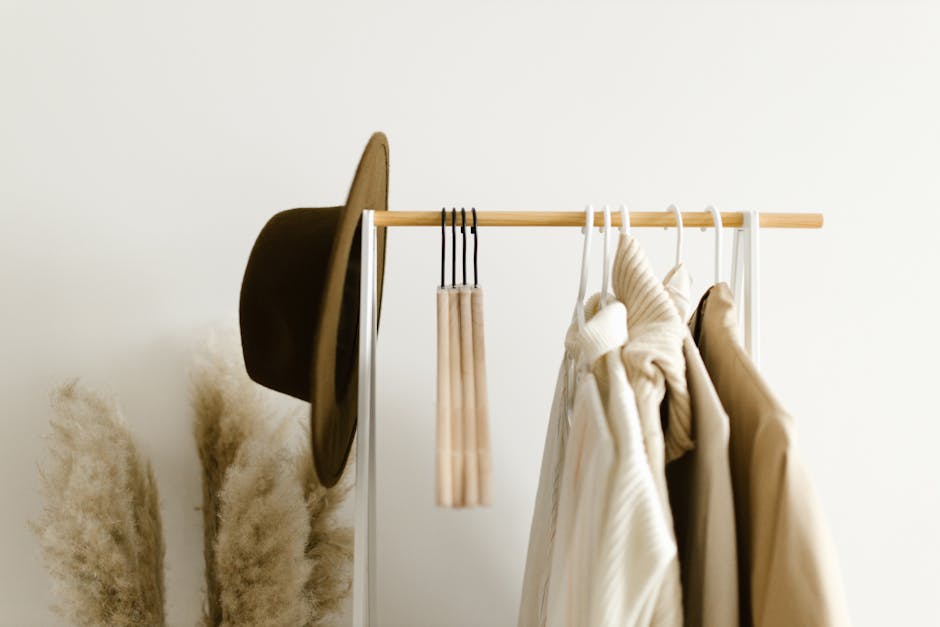
The idea of a capsule wardrobe is often misunderstood as deprivation — a minimalist exercise in owning less for its own sake. In practice, it is the opposite. A capsule wardrobe is about owning better. When every piece in your closet works in conversation with every other piece, getting dressed becomes faster, more intentional, and surprisingly more creative. The constraint of twelve garments is not a limit; it is a framework that forces clarity. What follows is a practical guide to building a capsule that performs far beyond its number.
The Philosophy Behind the Capsule
A capsule wardrobe operates on a simple principle: every piece must earn its place through versatility, quality, and personal resonance. The goal is not to own twelve items total but to identify twelve core pieces that anchor dozens of workable combinations. These are the garments you reach for repeatedly, the ones that survive trend cycles and seasonal shifts. When you remove the noise of impulse purchases and unworn statement pieces, what remains is a wardrobe that actually serves your life.
Why Twelve Works
The number twelve is deliberate. It is small enough to force honest editing but large enough to cover the full spectrum of daily needs — work, leisure, evening, and transitional weather. With twelve well-chosen pieces, you can generate upward of sixty distinct outfits. The mathematics is simple: each piece that pairs with multiple others multiplies your options exponentially. A closet of fifty disconnected garments yields fewer combinations than twelve coordinated ones, because the fifty likely include pieces that only work with one or two partners.
Quality Over Quantity
When you commit to fewer pieces, each one can be chosen with greater care and investment. A single well-constructed blazer in a superior fabric will outlast three fast-fashion versions and look better with every wear. The capsule model redirects budget from volume to value. This is not about designer labels; it is about construction, fabric, and fit. A mid-priced garment made from natural fibers with proper seam finishing will serve you longer than a bargain piece that loses its shape after three washes.
The Twelve-Piece Framework
While every wardrobe should reflect individual needs, the following framework provides a reliable starting point. Adjust proportions based on your climate, profession, and personal aesthetic, but resist the urge to expand the count. The discipline of twelve is what makes the system work.
The Foundation Layers
Begin with two neutral tops — a white cotton shirt and a fine-gauge knit in cream or grey. These are the workhorses, worn under blazers, alone in warm weather, and layered in cold. Add a well-cut t-shirt in a quality jersey, because even the most polished wardrobe needs a relaxed option. For bottoms, select two pairs of trousers in complementary cuts — one straight-leg in a mid-weight fabric and one wider or cropped pair for variation. A pair of dark denim in a clean wash rounds out the foundation, bridging casual and polished contexts.
The Structural Pieces
Structure is what elevates a wardrobe from basic to considered. Include one tailored blazer in a neutral tone — navy, camel, or charcoal — that fits precisely through the shoulder. Add a structured jacket or coat appropriate to your climate, such as a trench for temperate zones or a wool topcoat for colder ones. These two pieces do the heavy lifting for outfit elevation; thrown over the simplest foundation pieces, they instantly create a complete look. A midi-length dress in a solid color serves as a one-piece solution for occasions that demand more polish than trousers provide.
The Versatility Anchors
Two final pieces provide range. A fine-knit cardigan or sweater in a complementary neutral adds a layering option that softens tailoring. A skirt in a fabric and cut that pairs with both the knit tops and the structured jacket extends the outfit matrix. Together, these twelve pieces — three tops, three bottoms, two structured jackets, one dress, one knit layer, one skirt, and one t-shirt — form a matrix that covers nearly every situation a typical week presents.
Color and Fabric Strategy
The secret to a capsule that actually combines infinitely is a disciplined color palette. Choose two primary neutrals — for example, navy and camel, or black and grey — and one accent color that recurs across multiple pieces. When every garment shares a color family, pairing becomes nearly automatic. Fabric matters equally: pieces in similar weights and textures layer more naturally than mismatched materials. A silk blouse under a wool blazer works; a stiff polyester top under a soft cashmere jacket creates visual friction.
Maintaining and Rotating Your Capsule
A capsule wardrobe is not static. Review it seasonally, replacing pieces that have worn out or no longer fit your life. The discipline lies in replacing one-for-one rather than adding cumulatively. When you acquire a new piece, retire an old one. This keeps the wardrobe at its working size and prevents the slow accumulation that defeats the system's purpose. Store out-of-season pieces separately, and keep the active capsule visible and accessible. When everything you own is something you love and wear, the morning routine transforms from a daily frustration into a quiet pleasure.
Ultimately, a capsule wardrobe is an act of self-knowledge. It requires you to understand your actual life, your real daily needs, and the aesthetic that genuinely reflects who you are. The twelve pieces are merely the vehicle. The real result is a closet that finally makes sense — and a relationship with clothing that is finally, mercifully, uncomplicated.