Walk into any department store and you will find shelves of bags, shoes, and wallets described simply as "leather." The word is used as though it denotes a single, uniform material. It does not. Leather is a broad category encompassing an enormous range of qualities, and the distance between the best and the worst is vast. Understanding the vocabulary of leather, the terms that describe how it is graded and how it is tanned, is the difference between buying an object that lasts decades and one that begins to deteriorate within a year. This guide will give you that vocabulary so you can read past the label.
The Grades of Leather: A Hierarchy of Quality
Leather is graded based on which part of the hide is used and how much it has been altered from its natural state. The grading system is not perfectly standardized across the industry, which is part of what makes shopping confusing, but the broad categories below are widely recognized and will serve you well in most contexts.
Full-Grain Leather
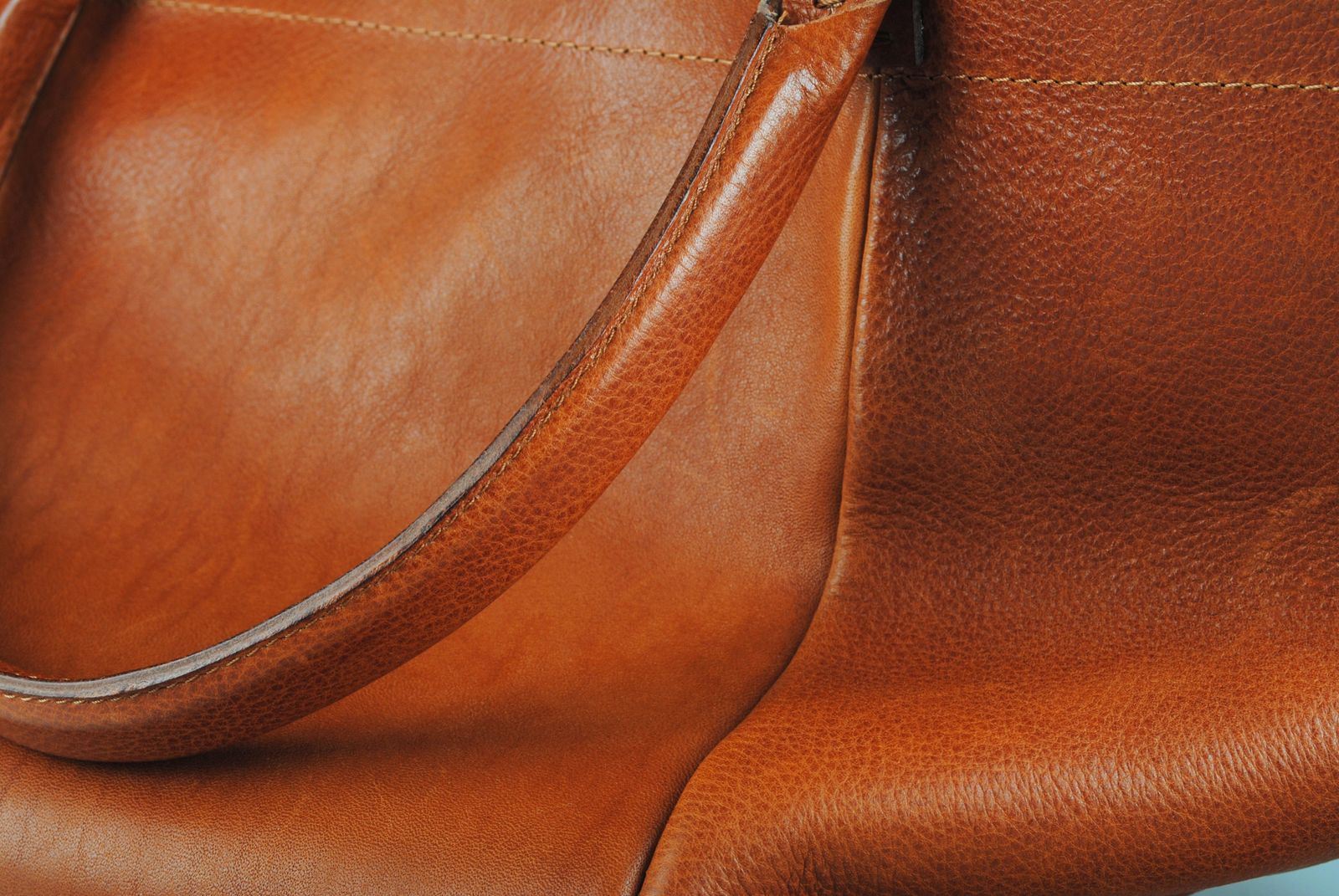
Full-grain is the finest grade available. It is taken from the top layer of the hide and retains the complete natural grain. Nothing is sanded, corrected, or buffed away. This means the leather keeps its natural strength, because the grain is the most durable part of the hide. It also means you will see natural markings, insect bites, scars, and wrinkles. These are not defects. They are evidence that the leather is genuine and unaltered. Full-grain leather is more expensive because only the best hides, those with the fewest blemishes, can be used without correction. It develops a rich patina over years of use and is the material of choice for heirloom-quality goods.
Top-Grain Leather
Top-grain is the second tier. The surface is lightly sanded to remove imperfections, and a finish coat is applied to give it a uniform appearance and added resistance to stains. The sanding removes some of the natural grain, which means the leather is slightly less durable than full-grain, though still a high-quality material. Top-grain is a practical choice for everyday items. It is more consistent in appearance, easier to clean, and less prone to scratching. The trade-off is that it will not develop the same depth of patina as full-grain, and the finish coat can wear over time, revealing a different texture underneath.
Genuine and Bonded Leather
These terms sound reassuring but describe the lowest grades of leather. "Genuine leather" is a legal designation that simply means the product contains some real leather. It is typically made from the layers beneath the top grain, which are weaker and less attractive. Bonded leather is even further removed from the original hide. It is manufactured by shredding leather scraps and binding them with polyurethane or latex, then pressing the mixture onto a backing. The resulting material has very little of the character or durability of solid leather and should be avoided for anything you expect to last.
The Tanning Process: How Hide Becomes Leather
Before leather is graded, it must be tanned. Tanning is the chemical process that converts raw animal hide into a stable material that resists decay. The method used affects the leather's color, texture, flexibility, and environmental impact. The two dominant methods, vegetable tanning and chrome tanning, produce distinctly different materials suited to different purposes.
Vegetable Tanning
Vegetable tanning is the older method, practiced for thousands of years. It uses tannins extracted from tree bark, leaves, and other plant matter to stabilize the hide. The process is slow, often taking several weeks, and produces leather with a warm, earthy tone and a firm, substantial hand. Vegetable-tanned leather is the traditional choice for belts, saddlery, and structured bags. It holds its shape well and takes tooling and embossing beautifully. Its limitations are that it is heavier, less flexible than chrome-tanned alternatives, and more susceptible to water damage if not properly treated. It also tends to be more expensive due to the time and labor involved.
Chrome Tanning
Chrome tanning, developed in the nineteenth century, uses chromium salts to process the hide. It is much faster, often completed in a single day, and produces leather that is softer, more flexible, and available in a wider range of colors. Most fashion handbags and garment leathers are chrome-tanned. The resulting material is lighter and more pliable, which makes it well suited to soft, unstructured designs. The environmental concerns associated with chrome tanning, particularly water usage and chemical waste, are real and being addressed by responsible tanneries, but the method remains the industry standard for soft, colorful leather goods.
Reading the Signs of Craftsmanship
Knowing the grade and tanning method tells you about the raw material. To assess the craftsmanship, you need to look at how that material has been worked. The quality of stitching is the most visible indicator. Hand-saddle stitching, where two needles interlock through each hole, is stronger than machine stitching because a break in one stitch does not cause the entire seam to unravel. Edge finishing, the treatment of the cut edges of the leather, is another marker. Burnished or painted edges show that the maker attended to every surface of the object, not just the ones you see first.
The Role of the Artisan
Even with excellent materials, the skill of the person assembling the piece is decisive. A well-cut pattern, aligned grain, and properly tensioned stitching all depend on human judgment. This is why two bags made from the same leather can differ dramatically in quality. When you can, handle the piece in person. Feel the weight. Flex the leather. Open and close the clasps. The difference between craftsmanship and mere assembly is something you can sense in your hands before you fully understand it in your mind.
Making Informed Decisions
None of this information is meant to suggest that only the most expensive leather is worth owning. There are excellent values at every price point, and there are overpriced goods at the top of the market. The goal is simply to give you the tools to evaluate what you are paying for. A top-grain, chrome-tanned bag from a responsible maker may serve you better than a full-grain, vegetable-tanned bag from a house that has cut corners in construction. Read the labels, ask questions, and let your own hands confirm what the terminology describes. Leather is one of humanity's oldest materials, and the vocabulary to describe it has been refined over centuries. Taking the time to learn it is an investment that pays off every time you shop.