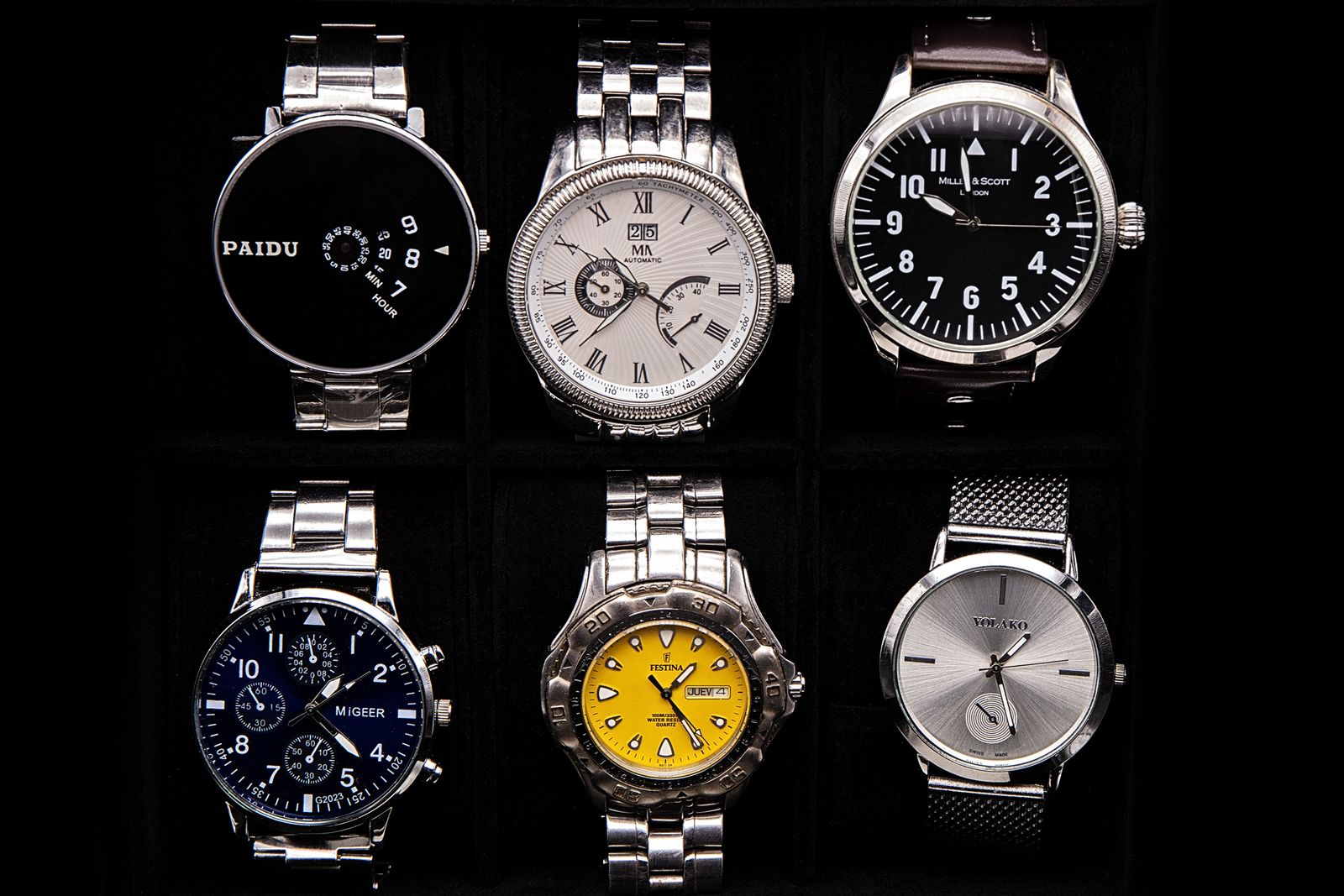
A watch is a singular object — at once a machine, a piece of jewelry, and in many cases an investment — and the decision to acquire one deserves more consideration than the purchase of most accessories. Unlike a ring or a necklace, which are admired primarily for their materials and their form, a watch is admired for what it does as much as for how it looks. The movement inside the case, invisible to anyone but the wearer, is the source of the fascination, and it is the thing that most determines what a watch is worth, what it costs to maintain, and what kind of relationship it demands from its owner. To buy a watch well is to understand the intersection of engineering and aesthetics, and to know where value resides in an object that can cost anywhere from a few hundred dollars to several hundred thousand.
Movements: The Engine Within
The movement, or caliber, is the mechanism that tracks time and drives the hands across the dial. It is the heart of the watch, and the choice of movement determines nearly everything about the ownership experience — the accuracy, the maintenance, the cost, and the emotional character of the piece.
Mechanical Movements
A mechanical movement is powered by a wound mainspring, and its timekeeping is regulated by an escapement and an oscillating balance wheel. It is the oldest surviving watch technology, and it remains the standard for fine watchmaking because of the craft it represents. A mechanical movement is assembled from dozens or hundreds of tiny components, and in its finest forms it is finished by hand — with polished bevels, engraved bridges, and decorative patterns that are visible only through a sapphire case back. The trade-off is accuracy: a mechanical watch will gain or lose a few seconds a day, and it requires periodic servicing, typically every five years, which is neither cheap nor convenient. What it offers in return is a connection to a tradition of horology that stretches back centuries, and the quiet satisfaction of wearing a machine that lives by the motion of the wrist.
Automatic Movements
An automatic movement is a mechanical movement that winds itself through the motion of a weighted rotor that swings as the wearer moves. It eliminates the need for daily manual winding, and it is the most common form of mechanical movement in contemporary watches. The underlying mechanism is the same as a hand-wound movement — spring, escapement, balance wheel — with the addition of the rotor and a winding system. For most buyers, an automatic represents the best of both worlds: the craft and character of a mechanical movement with the convenience of self-winding.
Quartz Movements
A quartz movement is powered by a battery and regulated by the vibration of a quartz crystal, which oscillates at a precise frequency when current is applied. The result is accuracy that mechanical movements cannot match — a quartz watch may gain or lose only a few seconds a year — and a reliability that requires nothing more than a battery change every few years. Quartz technology transformed the watch industry when it arrived in the 1970s, and it remains the most practical choice for a buyer who wants accuracy and low maintenance above all else. The trade-off is that a quartz movement lacks the craft and the romance of a mechanical one. It is a tool, not an heirloom, and it is valued accordingly.
Materials: From Steel to Precious Metal
The case material of a watch determines its weight, its durability, its appearance, and a significant portion of its cost. The choice of material is both an aesthetic and a practical decision, and it interacts with the movement in ways that are not always obvious.
Stainless Steel
Stainless steel is the most common case material for good reason. It is durable, resistant to corrosion and scratching, and relatively affordable, which allows the budget to be directed toward the movement and the finishing. A well-made steel watch can be worn daily for decades, and it carries an understated quality that suits nearly every context. Many of the most respected watches in the world are cased in steel, and the material carries no stigma in the way that base metals might.
Gold and Platinum
Gold — whether yellow, rose, or white — adds warmth, weight, and intrinsic material value, and it has long been the traditional choice for dress watches and formal pieces. Gold is softer than steel, which means it will scratch more readily, and it is significantly more expensive, but it carries a prestige and a tactile quality that steel cannot replicate. Platinum, rarer and denser than gold, is the most prestigious case material of all — it develops a distinctive patina over time and has a weight on the wrist that is immediately recognizable. A precious-metal watch is a statement of commitment to the form, and it is typically acquired by a buyer who already has a steel watch and is adding to a collection rather than starting one.
Value: What a Watch Is Worth
Watch value is a complicated subject, because it operates on several levels simultaneously. There is the material value of the metal and stones, the craft value of the movement and finishing, the brand value of the name on the dial, and the market value of what the watch can be resold for. These values do not always align. A watch with a celebrated name may carry a market value far above its material or craft value, while a watch from a lesser-known maker may offer exceptional craft at a fraction of the cost. The buyer who is acquiring a watch as an investment — with the expectation of resale — must understand the market dynamics that govern specific brands and references, which is a subject deep enough to fill a library. The buyer who is acquiring a watch to wear and to keep should focus on the craft and the character of the piece, and should be skeptical of any claim that a watch will appreciate. Most do not. What most watches do offer is the pleasure of a well-made object, the satisfaction of a machine that performs its function with grace, and the slow accumulation of personal meaning that comes from wearing the same watch for years. That, rather than financial return, is what makes a watch worth owning.


