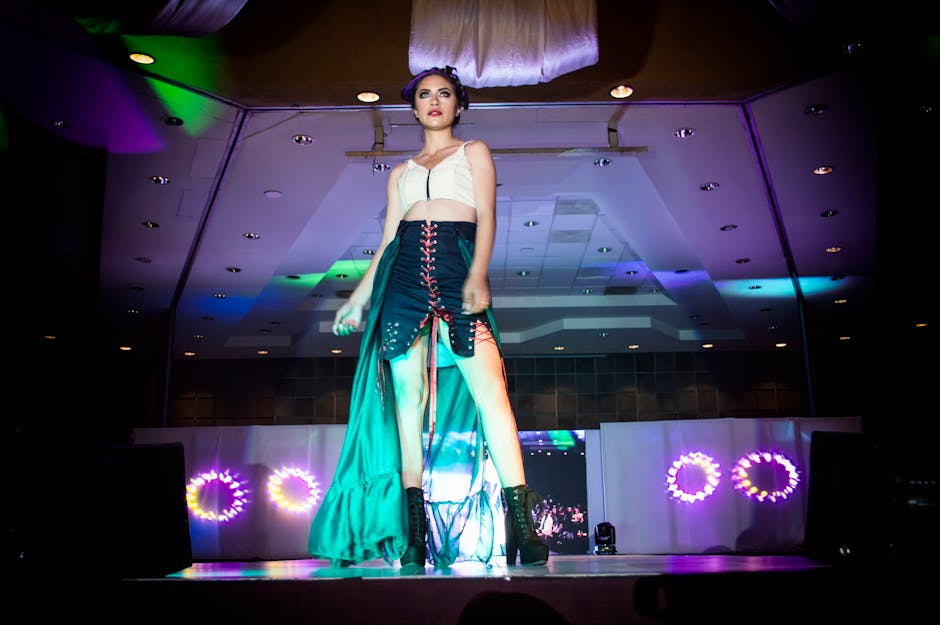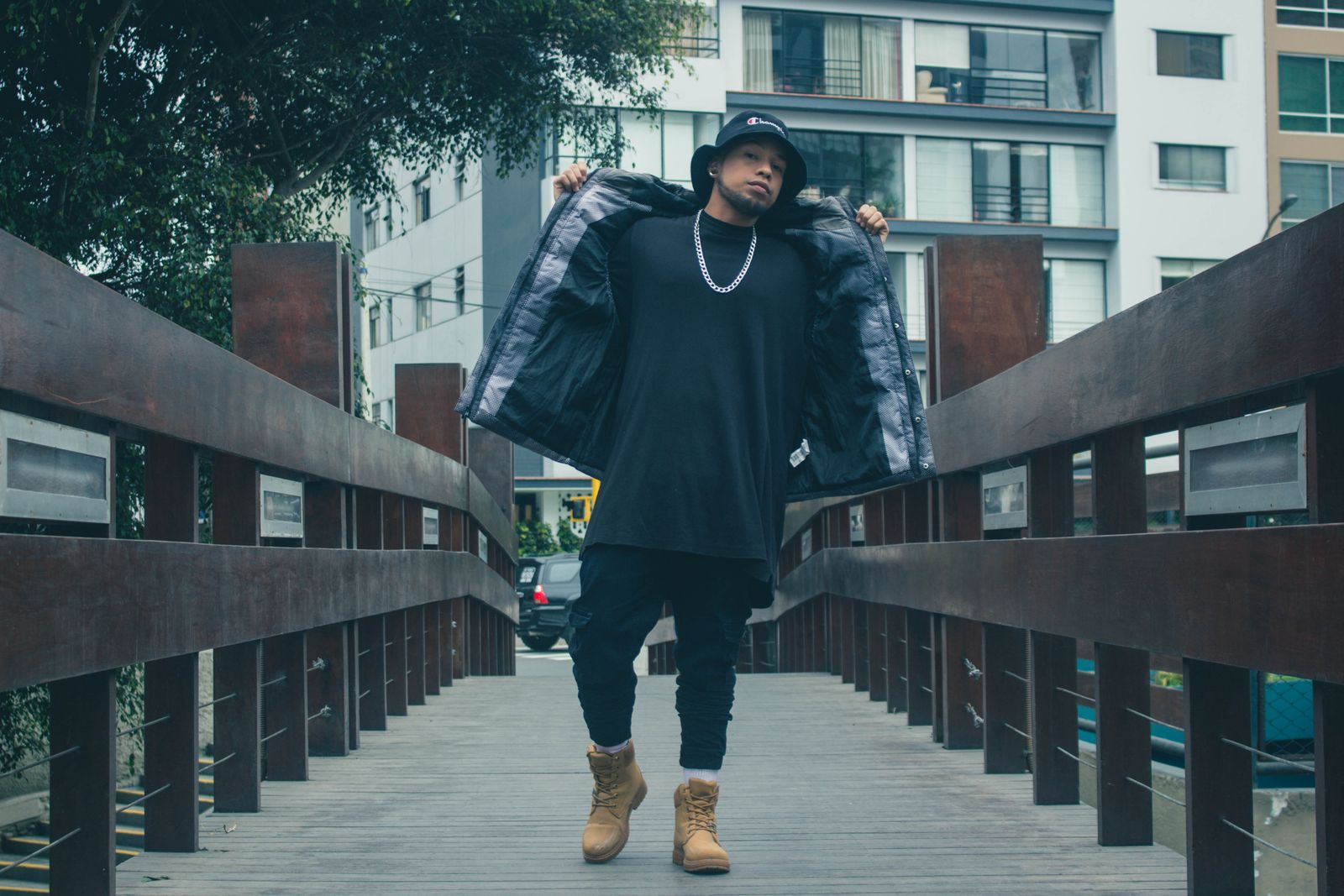
There was a time when the phrase "street style" referred to something the fashion industry observed from a safe distance. Photographers prowled the pavements outside shows in Paris and Milan, hunting for eccentric dressers who had not been invited inside. The resulting images were filed as curiosities — evidence of what real people were doing with the clothes that designers had imagined for them. Two decades later, the relationship has inverted. The street no longer waits to be photographed. It sets the agenda, and the industry scrambles to keep up. How did the document become the directive?
The Origins: Outsiders With a Uniform
Street style is not a single phenomenon but a lineage of subcultures, each with its own uniform. To understand how the street came to lead fashion, one must first understand what the street was protecting itself against. Subcultural dress was never merely aesthetic. It was a declaration of belonging, a refusal to assimilate, and often a coded language that outsiders could not read.
Post-War Youth Tribes
The story begins in earnest after the Second World War, when youth culture emerged as a distinct demographic with disposable income and a desire to differentiate. The Teddy Boys of 1950s London adapted Edwardian drape coats and paired them with brothel creepers, creating a silhouette that horrified older generations and enchanted younger ones. Across the Atlantic, the greasers of America's working-class neighborhoods adopted leather jackets and white t-shirts borrowed from Marlon Brando's wardrobe. These were not fashion choices in the editorial sense. They were identity markers, worn to signal allegiance to a group that the mainstream either ignored or feared.
Punk, Hip-Hop, and the Language of Refusal
By the late 1970s, subcultural dress had grown more aggressive and more deliberate. Punk's torn tartan, safety pins, and bondage trousers were a deliberate desecration of postwar propriety — a wardrobe assembled from the debris of a society that punks felt had failed them. Hip-hop, emerging from the Bronx in the same era, developed its own grammar: tracksuits, gold chains, sneakers, and later the oversized silhouettes that would become a global shorthand for urban cool. Both movements were born from marginalization, and both were initially met with suspicion by the fashion establishment. Yet within a generation, their visual codes would be quoted on the most expensive runways in the world.
The Photographer's Gaze
The transformation of street style from subcultural curiosity to industry engine cannot be told without the photographers who documented it. Their work did not merely record what people wore — it conferred value upon it, framing anonymous dressers as figures worth looking at.
From Candid Snapshots to Editorial Currency
Bill Cunningham's columns for the New York Times were foundational. Cunningham photographed people on the street without judgment, treating a sequined evening gown and a thrift-store raincoat with the same documentary seriousness. His work insisted that fashion was not exclusively what appeared in magazines — it was also what appeared on the subway, at gallery openings, on the steps of the Met. Across the Atlantic, photographers like Jamel Shabazz documented hip-hop style in Brooklyn with a warmth and specificity that archival fashion photography rarely achieved. Their images did not flatten their subjects into trends. They preserved the dignity of people who had dressed themselves with intention.
The Blog Era and the Speed of Capture
The arrival of style blogs in the mid-2000s changed the velocity of the entire system. Scott Schuman's The Sartorialist and Tommy Ton's Jak & Jil replaced the slow cycle of magazine publishing with a near-instantaneous feed. A person photographed outside a show in Paris on Tuesday could be seen by hundreds of thousands of readers by Wednesday morning. This compression of time did something subtle but profound: it turned street style into a live feed of trend intelligence. Buyers, designers, and editors began watching the blogs not for inspiration in the romantic sense but for data. What were people actually wearing? What was emerging from the bottom up? The street had become a research tool.
The Inversion: When the Street Leads
The most significant shift in the last decade is not that the industry pays attention to street style — it always did, in its way — but that the street now produces trends faster than the runway can. Sneaker culture is the clearest example. Limited-edition drops, resale markets, and the cult of collaboration between musicians, athletes, and footwear brands have created a parallel economy that traditional fashion houses have been forced to enter rather than ignore. When a rapper's endorsement can sell out a shoe in minutes, the old hierarchy of designer-to-editor-to-consumer no longer holds.
Luxury's Borrowed Vocabulary
Luxury brands have responded by absorbing streetwear's vocabulary. Hoodies appear in collections priced at thousands of dollars. Logomania, once dismissed as vulgar, has been rehabilitated as a knowing gesture. Collaborations between heritage houses and streetwear labels are no longer experiments but annual rituals. The question is whether this absorption represents genuine respect for the culture or a sophisticated form of appropriation — luxury borrowing the credibility of the street while pricing out the people who created it. The answer, inevitably, is both.
What the Street Still Knows
For all the industry's absorption of street style, something irreducible remains outside its reach. The street still does something the runway cannot: it tests clothing against real life. A jacket that looks extraordinary under show lighting must survive rain, subway platforms, and the scrutiny of strangers. Street style, at its best, is the record of that test — of what people choose to keep, alter, and wear again. It is fashion returned to its original purpose, which is not to be admired on a pedestal but to be lived in. The industry can photograph the street, quote it, and sell it back at a markup. But the street itself remains one step ahead, already moving on to the next thing before anyone has finished naming the last.